Lyrics
Plow Your Rows Straight
Read together: Deuteronomy 6:4–9; 2 Timothy 1:5; Luke 15:1–7; Luke 9:62; Philippians 4:11–13; 1 Thessalonians 4:13–14
Who first told you that Jesus loves you? For some of us it was a parent or grandparent. For others it was a Sunday school teacher, a neighbor, or a friend who would not give up. And some of us are still waiting for someone to say it in a way we can believe.
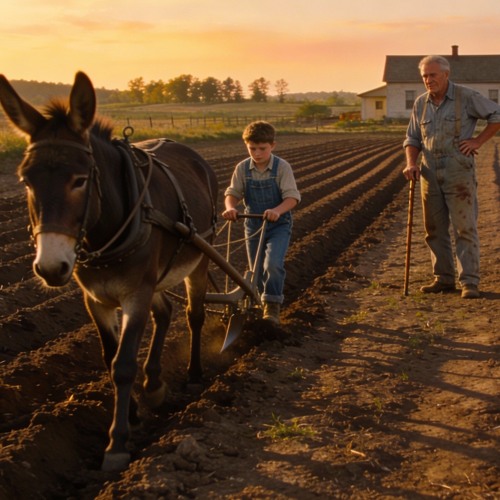
This song is a family story told across generations. A grandfather on a hot Alabama road, holding the reins steady and passing on what mattered most: there's an old rugged cross, Jesus loves you, read your Bible and pray. A boy for whom words came hard, carrying little notes from home that spoke for him. Then war, the loss of his father, and a season when he believed no more. And finally, a lonely night far from home when the Father called him back and he realized everything he had been taught was still true.
We will not pretend to know more of that story than the song tells us. But many of us recognize its shape. Read Deuteronomy 6:4–9. Moses told Israel to love the Lord with all their heart and to speak of His words at home and on the road, when they lay down and when they rose up. Faith was never meant to be kept for formal occasions. It was meant to be handed down in ordinary moments—beside a field, over a kitchen table, on the walk home. Paul saw the same thing in Timothy, whose sincere faith had first lived in his grandmother Lois and his mother Eunice (2 Timothy 1:5).
Yet a faithful upbringing does not save anyone by itself. The boy in this song still had to face his own doubt. "Jesus loves me, but why's life so wrong?" is an honest question, and many people stop believing somewhere between that question and an answer. If that is you, read Luke 15:1–7. Jesus described a shepherd who leaves the ninety-nine to search for the one that is lost and keeps searching until he finds it. A parent's promise—"If you get lost, I'll come lookin' for you"—is a small echo of a far greater love. The Lord pursues those who have wandered, and He welcomes everyone who turns to Him through Jesus Christ.
The title also brings to mind Jesus' words in Luke 9:62: no one who puts a hand to the plow and keeps looking back is fit for the kingdom of God. Straight rows are not plowed by perfect people. They are plowed by people who keep their eyes fixed ahead. Following Jesus means steady, daily faithfulness—Scripture, prayer, trust, obedience—especially when the days are heavy and the nights are long.
One word of care. When the song says "there ain't nothin' you can't do," we hear a grandfather's encouragement, not a promise of unlimited ability. Paul's words in Philippians 4:11–13 were written about learning contentment in plenty and in need. Christ strengthens His people for whatever He calls them to face. And the song's closing picture of parents now home with the Lord reminds us that believers grieve, but not without hope (1 Thessalonians 4:13–14).
A moment to respond: Thank God by name for the person who first pointed you to Jesus. Then think of who is walking behind you—a child, a grandchild, a friend, a coworker. What would one straight row look like for them this week? A prayer said aloud, a verse shared, a promise kept. And if you are the one who wandered, you do not have to find your own way back. Tell Jesus the truth and come home.
Let's pray: Father, thank You for those who taught us Your Word and prayed for us when we were young. Forgive us for the times we wandered or doubted. Thank You for coming after us in Jesus, who died and rose again to bring us home. Help us keep our hands on the plow and our eyes on You, and let our lives teach those who follow us to love and trust Your Son. Amen.
Our desire at UnrelentingJesus is that the faith once spoken in fields and kitchens would not end with one generation, and that every wanderer would know the Father is still looking for them.