Lyrics
I’m Gonna Rise And Sing Again
Read together: Micah 7:7–9; Psalm 51:10–15; 1 John 1:8–9; Luke 10:1–2; Romans 1:21
Look around and it can seem as though prayer has gone out of fashion. People rush from one thing to the next, rarely stopping to think, and rarely bowing their heads. Then trouble comes, and suddenly everyone is back on their knees. This song notices that pattern, and it asks some hard questions: When did we decide to stop seeking God's face? When did we decide there were no more souls to win? When did we stop giving thanks?
We should hear those questions as an invitation to examine ourselves, not just to criticize others. Read Romans 1:21. Paul says that although people knew God, they did not honor Him as God or give thanks to Him, and their thinking became futile. Ingratitude is not a small sin. It is often where drifting from God begins.
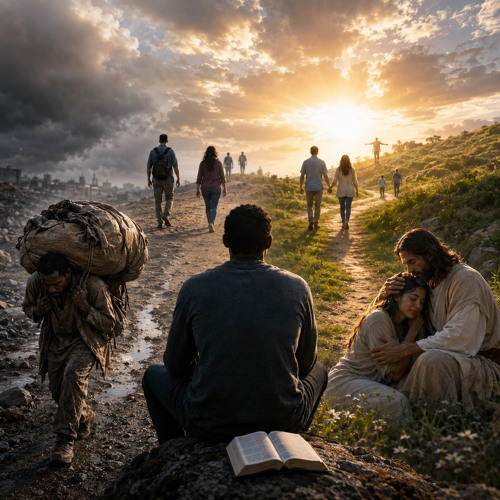
The song does not end in complaint. It ends with a personal resolve: In the presence of the One who died for all, I'll tell you what I'm gonna do. The singer will fall on their knees and pray, beg God's mercy every day, shake off guilt and shame by the power of Jesus' name—and then rise and sing again.
That sequence is deeply biblical. Read Micah 7:7–9. The prophet writes during a dark time in Israel: "But as for me, I will look to the Lord; I will wait for the God of my salvation. My God will hear me. Do not gloat over me, my enemy! Though I have fallen, I will arise; though I sit in darkness, the Lord will be my light." Micah does not deny that he has fallen. He even says, "I will bear the Lord's wrath, because I have sinned against Him." But he knows that falling is not the end of the story. He will rise.
Read Psalm 51:10–15. After his terrible sin with Bathsheba, David prayed, "Create in me a clean heart, O God… Restore to me the joy of Your salvation." Then he made a promise: "Then I will teach transgressors Your ways… my tongue will sing of Your righteousness." Forgiveness leads to song. And song leads to witness.
How do we shake off guilt and shame? Not by pretending they are not there, and not by trying harder. Read 1 John 1:8–9. If we claim to be without sin, we deceive ourselves. But if we confess our sins, He is faithful and just to forgive us and cleanse us from all unrighteousness. The song is right: guilt and shame fall away by the power of Jesus' name. He is the spotless Lamb whose blood washes and frees.
The song also pushes back on the idea that there are no more souls to win. Read Luke 10:1–2. Jesus told His disciples, "The harvest is plentiful, but the workers are few. Ask the Lord of the harvest to send out workers into His harvest field." The harvest has not ended. The question is whether we will pray and go.
Maybe you are in a fallen place right now. You stopped praying a long time ago, and only trouble has brought you back to your knees. Don't be ashamed that trouble brought you. Be glad you came. Confess your sin, receive His forgiveness, and then rise.
A moment to respond: For the next seven days, begin each morning on your knees, even for two minutes. Pray Psalm 51:10–12. Then name one person who needs Jesus and ask the Lord of the harvest to send someone to them—perhaps you.
Let's pray: Lord, forgive us for rushing past You and only calling when trouble comes. Forgive our ingratitude. We fall on our knees and ask for Your mercy. Wash away our guilt and shame by the power of Jesus' name. Create in us clean hearts, restore the joy of our salvation, and raise us up to sing again—and to tell others about You. Amen.
Our desire at UnrelentingJesus is that wherever you have fallen, you would rise again in the forgiveness of Jesus—with a new song to sing.